White on White. Purifying Cotton

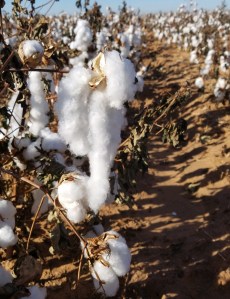
A lot of people don’t realized that pure natural cotton is not white. It becomes stained with plant mats. and oils from the seeds when being ginned. Companies use industrial means to whiten the cotton. I want to know where my fiber and yarn comes from, and if it is eco-friendly.

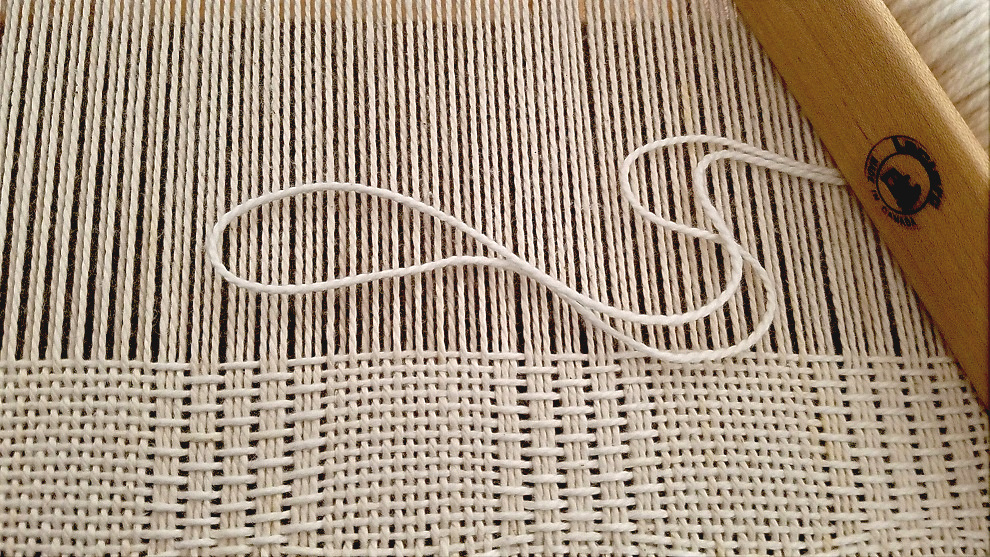
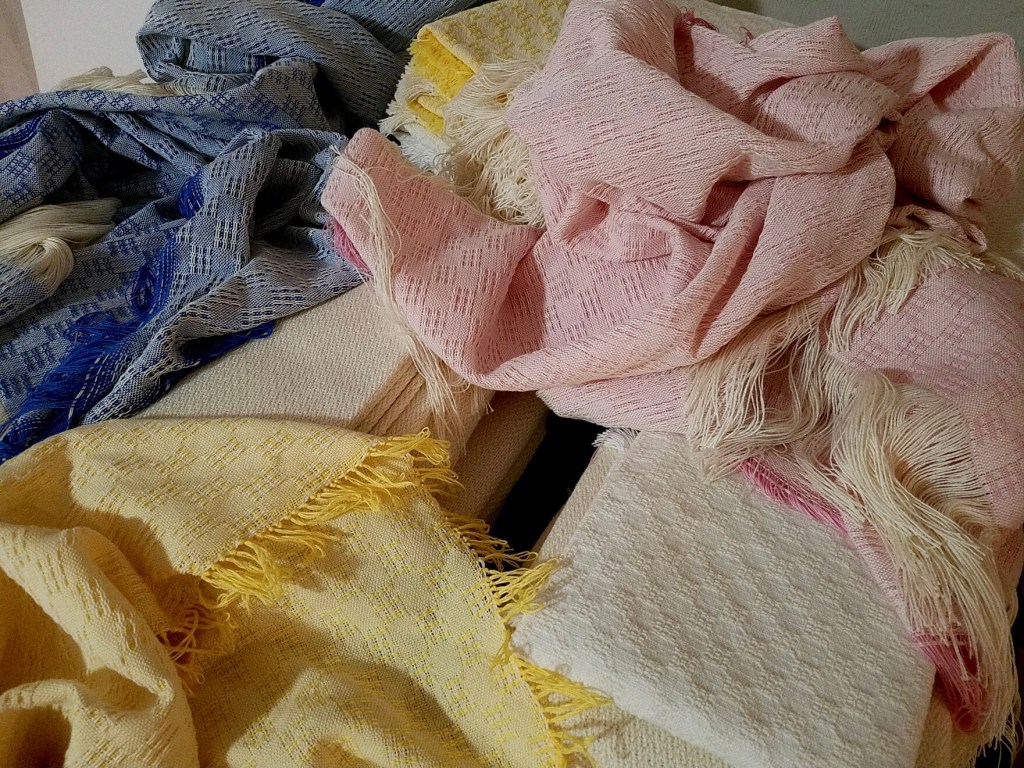
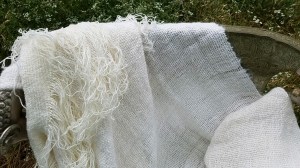
Using only natural ingredients and old fashion ways, I am starting to lighten my own fibers and yarn when needed. In the pictures, (hard to tell in the pictures) the weaving has a natural cotton warp and and whiten weft. Just a shade different to show the draft more.

Khadi Cotton

In India, Khadi refers to handwoven and hand spun cloth.

Mahatma Gandhi collected large sums of money to create a grass-roots organization to encourage handloom weaving. This was called Khadi cloth – a natural fiber that is hand spun and hand woven. A craft that Mahatma Gandhi rekindled over one hundred years ago in India.

This is my first attempt at weaving “Khadi” cloth, using imported hand spun Kala Cotton from India.

Organic – Earthy
Texas Khadi

Dressing my three looms with new warps.

Picture 1 will become a blanket
3/2 natural cotton, 56.75″/680 threads
Approx 4′ x 8′ finished.

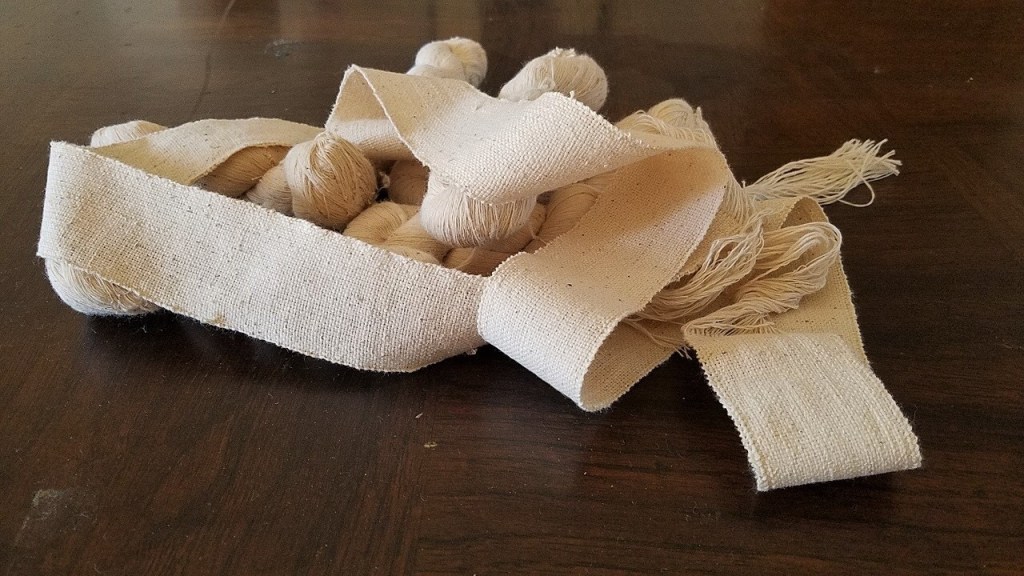
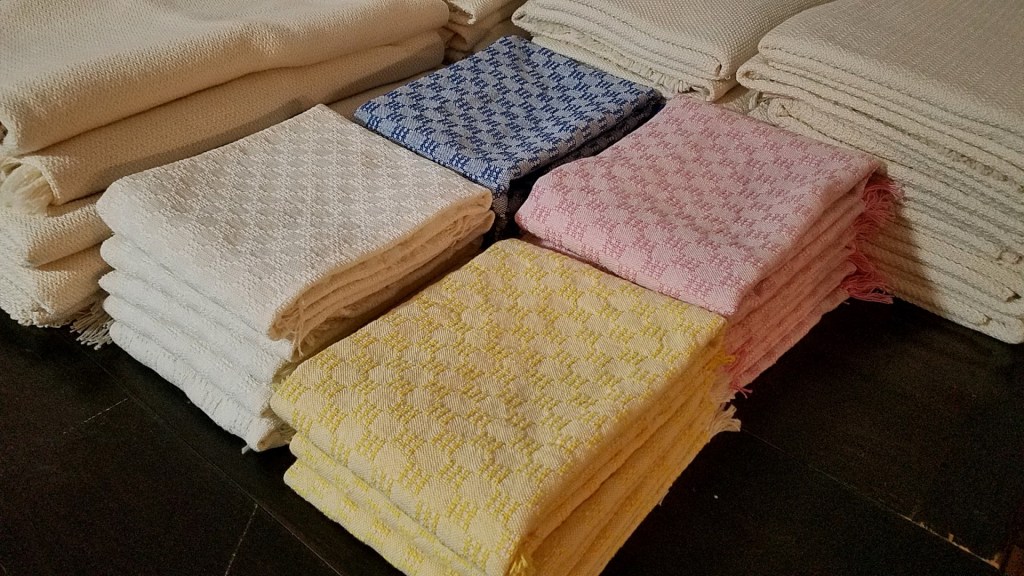
Picture 2 will become crib blankets
8/2 natural cotton, 36″/864 threads
Approx 30″ x 30″ finished

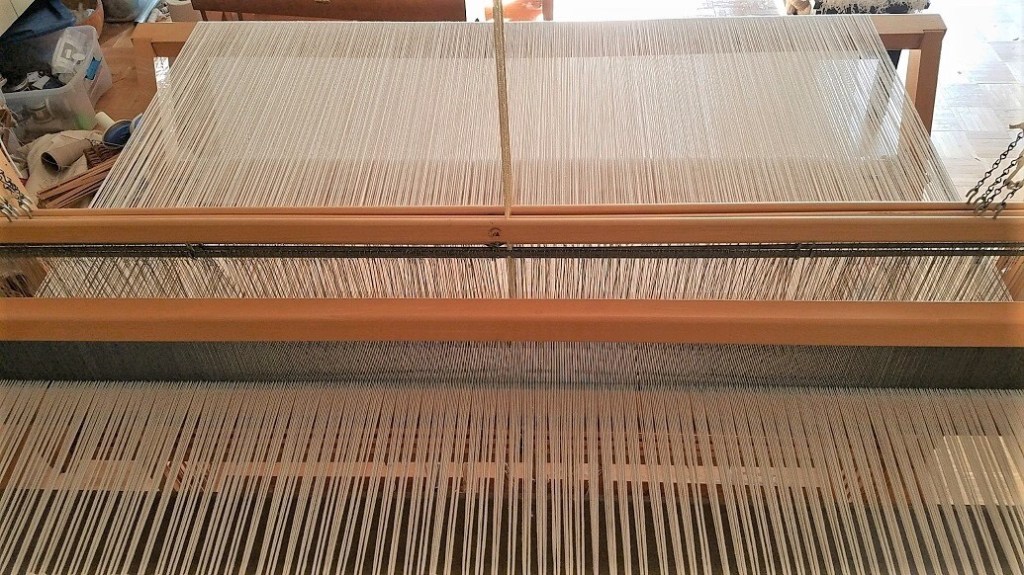
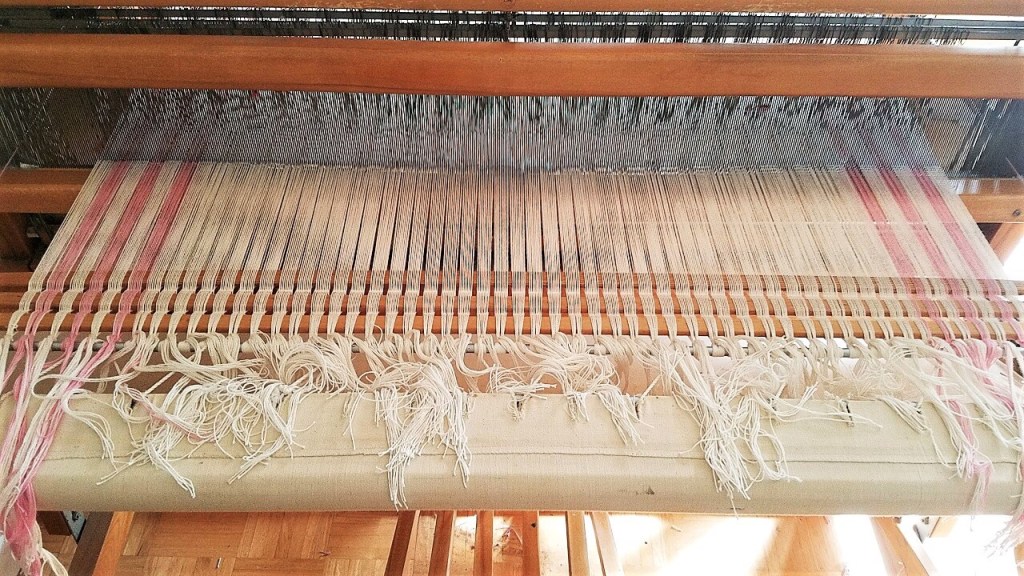
Picture 3 is a test weave
Kala cotton, 2″/96 threads

Loom Woven Baby Blankets

Crafted by hand,
My blankets are special because of the stories they collect over time.
Objects that traveled down the branches of our family tree.

My blankets represent a beloved person or memory.
They add warmth and personality to a home.
Wrapping us up in warm memories.

100% Natural Cotton Baby Blankets. Hand Tied Knotted Fringe.

Baby Crib / Receiving Blankets

Finishing up hand tying the ends. Getting ready for the newbornโ€™s and market.

There will be a total of 12 with this draft, 3 each.
Colors being White, Yellow, Blue and Pink. All Natural Cotton.

For every three security blankets woven, one is removed to gifted to a children hospital. With the receiving / crib blankets, for every four one is gifted.

Tzedakah, Dฤna, Gifting

Llano Fiber

Starting to “Wet Finish” my Weaving’s

For those that want to know what that means, this is it.

Once the threads/yarns have been woven, they are still not considered cloth.
Wet finishing is a process of washing the newly made cloth so that the threads relax and “bloom”.

When I finish weaving a throw, I will cut it off the wooden loom.
Each piece is then hand-washed in hot water with a mild detergent. Then hand rinse and dried in the dryer.

Wet finishing is the final step in making a piece of cloth on a hand loom.
Wet finishing changes the texture and drape of the cloth. The cloth will also have a shrinkage from 10% t0 15%, depending on the pattern weave.

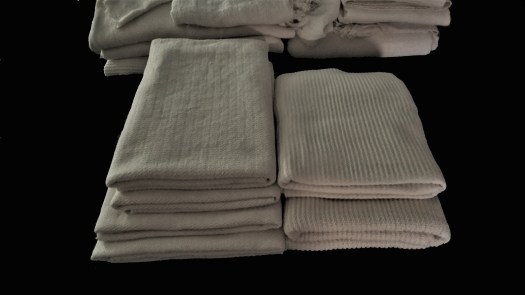
In the picture you can see an example
of what I mean.

In the picture on the left, the two on the bottom are a light and heavy weight throws, cut of the loom. The two above them have been wet finished.
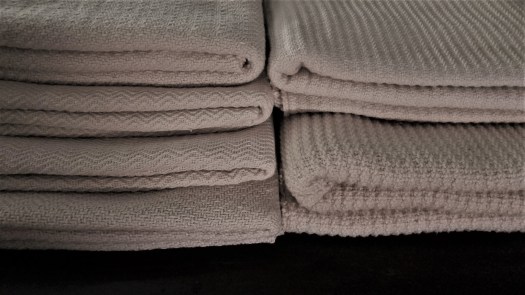
On the right, they are wet finished, but it shows you how the pattern weave can change the texture.

Bast Fibers

This is our supply of Asa (bast) Fiber imported to us from Kyoto, Japan.

Natural bast fiber was used in textile in the ancient times.

Bast fibers are collected from the outer cell layers of the plant’s stem. These fibers are used for durable yarn and fabric. Examples are flax, hemp, ramie, rattan, and vine fibers.

The first picture shows 1 kilo each, Aoso (natural ramie), Mapi (natural outerbark of ramie) & Asao (natural hemp)

By hand we will be turning the bast fibers into threads to create our unique artist throws.

The lower picture is how I start to split Aoso (natural ramie) Fiber.
After splitting the fiber, they will be joined together and spun into threads.

Beginning, “The place where something begins”

Beginning
“The place where something begins”

The beginning of a Loom Woven, Cotton, Heirloom Blanket.

I weave a blanket that is meant to be used. The cotton is grown and milled in the USA. Two thickness of yarn are use in the creation of these blankets. I start by choosing a pattern from a book that was first published May of 1944. My reprint of the book is the 26th edition, from 1989. After a pattern is chosen, three blankets are woven in a light weight and a heavy weight cotton each. When each blanket is cut off the wooden loom, the ends are hand tied with an overhand knot. That pattern might not every be used again.

These blankets will age just like your favorite old jeans.

Tzedakah, Dฤna, Gifting

Of the three of each set, one is removed to gifted to a children hospital.
The remaining two will be offered for purchase.